


 English

News
Tue 09 , 2026
Fluid and airflow components are some of the least forgiving parts in automotive Tooling. Unlike a cosmetic panel, a Valve Block or manifold plate has to control the exact path of liquid or air through the part — a small deviation in internal channel geometry can affect system performance in ways that are hard to detect until the vehicle is already on the road. This is why buyers sourcing an automotive plastic injection mold for fluid-system parts usually need a manufacturer who treats internal accuracy as the top priority, not just external appearance.
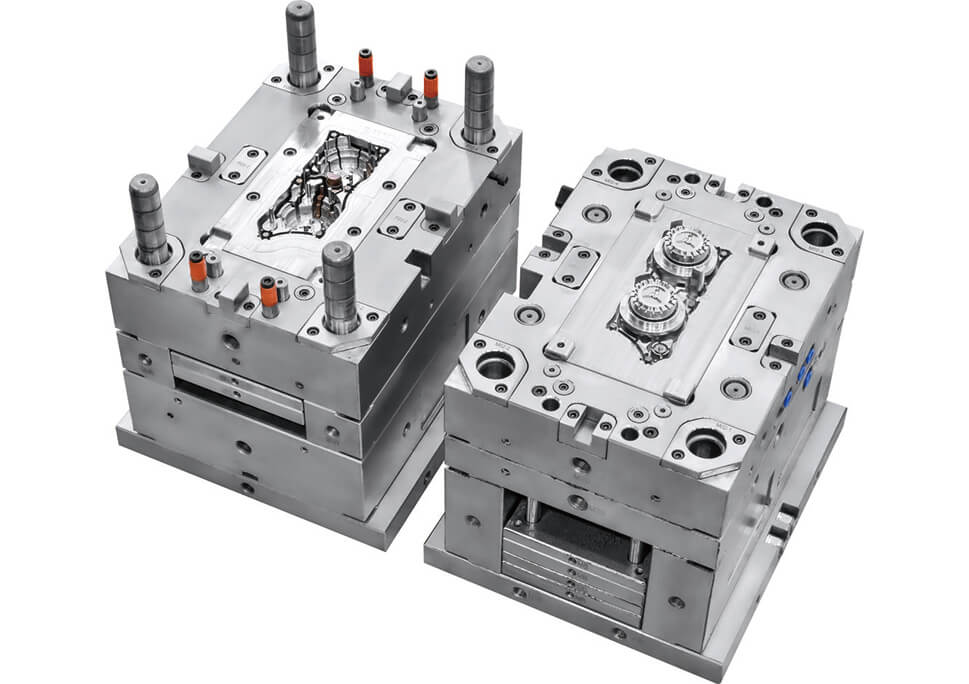
A valve block controls the flow of fluid or air through an automotive system, often through several internal ports that must align precisely with mating components. As a precision automotive mold project, this part type depends on:
CNC and EDM machining of internal cavity geometry to hold tight port-to-port tolerances
Wear-resistant steel, such as H13 or 1.2343, to withstand repeated cycling without dimensional drift
CMM inspection of internal channel dimensions before the mold is approved for trial
Buyers evaluating an automotive parts mold manufacturer for a valve block project should ask specifically how internal channel dimensions are verified — a supplier that only checks external part dimensions is missing the feature that actually matters most for this component.
Have a valve block or fluid-system part to tool? Share your drawing and target cavity count for a quote within 24 hours.
A manifold plate distributes fluid or air across multiple outlets within an automotive system. Because these parts are typically produced at higher volumes, dimensional consistency across the full production run matters as much as the initial mold trial result. A custom plastic mold manufacturer producing this part type should be able to show dimensional reports from multiple stages of machining — not only a single final inspection — to demonstrate that the mold will hold tolerance across thousands of cycles.
An air guide (duct) segment routes cabin airflow through an automotive HVAC system. These parts usually require larger, thin-wall cavities with smooth internal surfaces to maintain airflow efficiency — a very different tooling challenge from the tight internal channels of a valve block. Mold-flow analysis at the Design stage is essential here to avoid warping or incomplete fill across the larger cavity area, and multi-cavity or side-action tooling is often required depending on the duct geometry.
Fluid and HVAC components cover a wide range of tooling challenges under one general label. Before awarding a project, ask a potential automotive parts mold manufacturer:
How are internal channel or port dimensions verified — CMM inspection against 3D data should be the standard, not a visual or gauge-only check
What steel grade is used for high-cycling components, and is it selected based on expected production volume
Is mold-flow analysis performed for large, thin-wall cavities before tooling starts
What documentation is provided at each stage of manufacturing, not just at final mold trial
Whether the project is a valve block, a manifold plate, or an air guide segment, fluid and airflow parts demand a precision automotive mold approach built around internal geometry control, not just external cosmetic quality. A custom plastic mold manufacturer with documented CMM inspection, mold-flow analysis, and cycle-tested steel selection is better positioned to deliver consistent parts across the full production run.
Send us your fluid-system or HVAC part drawing for a free tooling feasibility review.
We attach great importance to the customers' demands for product quality and rapid production.
We always believe that meeting the customers' needs is the realization of our value!